I gave my side projects an AI org chart
I've been running CreatorSkills and TeslaLockSound solo for a while. No team, just me duct-taping AI tools together. Then I tried Paperclip.
Productivity
2 min
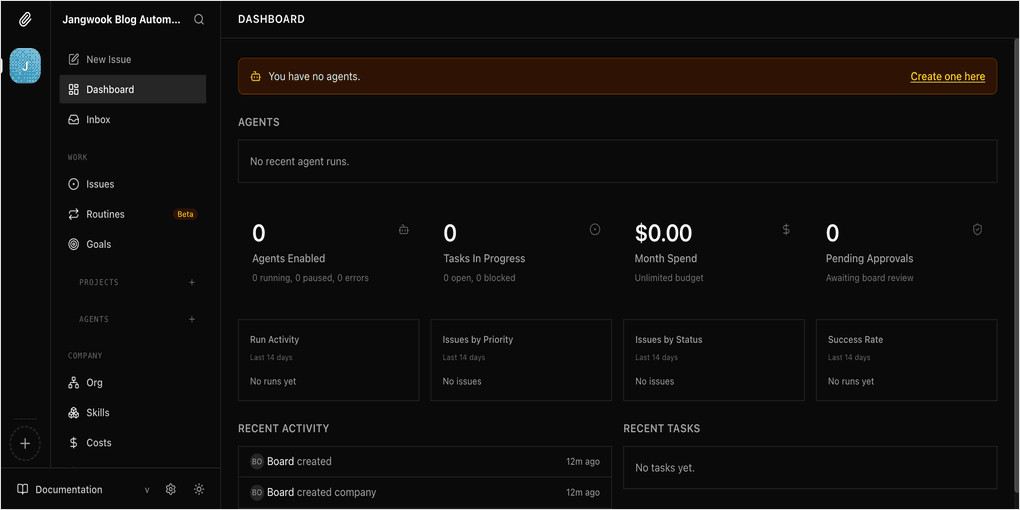
Paperclip is an open-source platform that launched on GitHub in March 2026 and hit 31,000 stars almost immediately. The premise: build a "zero-human company." You define an org chart, assign AI agents to roles, set a goal, and let them run on a schedule. You're the board. They do the work.
I set up both projects as separate companies inside one instance. For CreatorSkills, I gave it a content agent for copy updates and bundle descriptions, and a research agent to flag what topics creators are actually asking about. For TeslaLockSound, simpler: surface new sound submissions, update category descriptions, keep things moving.
The part I didn't expect was how useful it is just to write the org chart. To hire an agent, you write a real job description. You define what success looks like for that role. Doing that for both projects made me realize I'd been pretty vague with myself about what I needed them to do week to week. The agents aren't magic. But the structure around them? Actually useful.
What hasn't worked: anything requiring judgment about tone. The TeslaLockSound content agent is fine, but anything touching the community needs a review pass from me. It's flat. That's not a Paperclip problem, it's an agent problem. Paperclip just makes it visible. Every ticket, every decision, nothing off-screen. I appreciate that.
I'm still watching whether the scheduling holds up without constant babysitting, and whether the agent-driven content work moves the needle on CreatorSkills at all. There's a feature coming called Clipmart, downloadable company templates, which I'm curious about. Writing org charts from scratch is the biggest friction point right now.
It's worth trying if you've got a side project that runs mostly on your own mental overhead. Just don't expect it to run itself.